Wealthy investors see a lucrative future in fine art
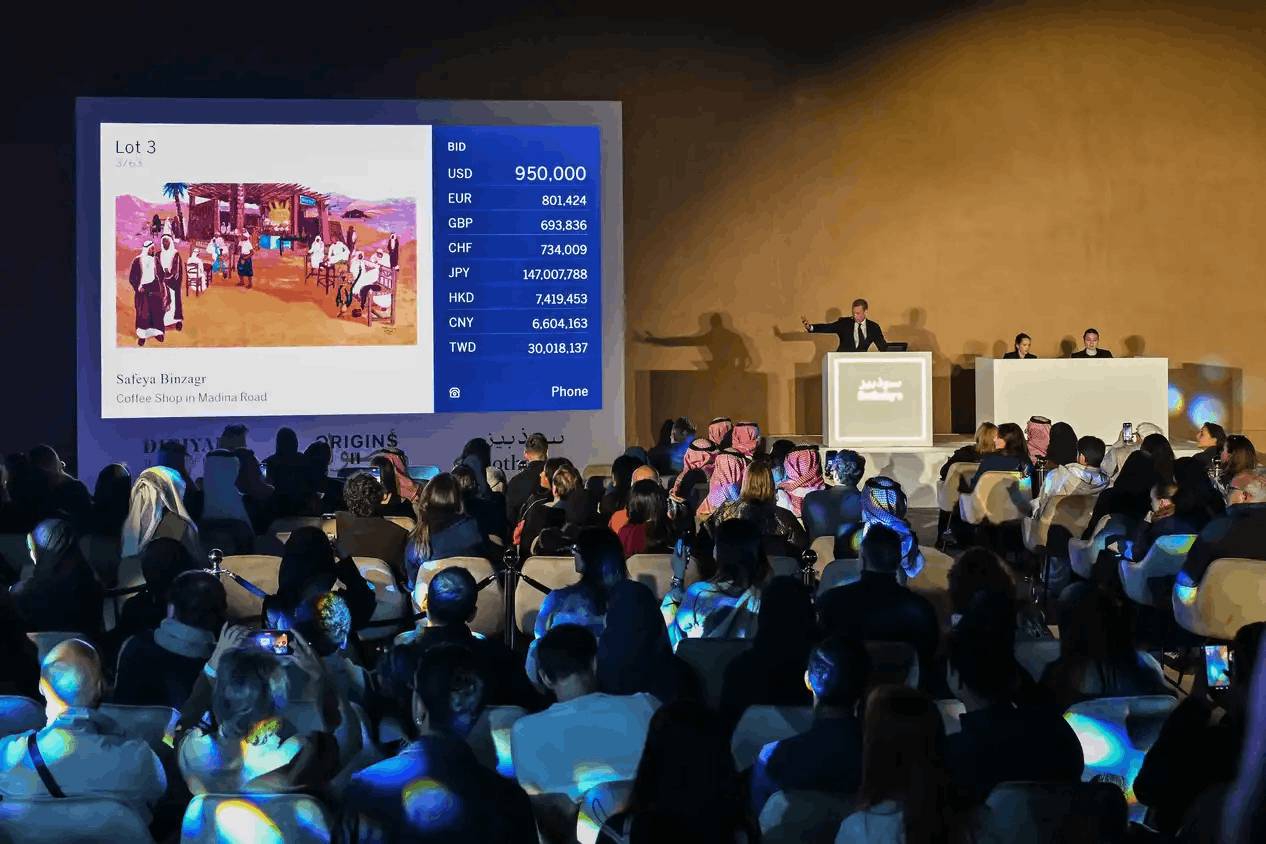
After years in the doldrums, fine art sales at global auction houses recovered in 2025 and the shift is feeding through into the Gulf, where rising wealth and a growing collector base are driving demand for regional and international works.
At Sotheby’s second Saudi auction in Diriyah in January, Coffee Shop in Madina Road by local artist Safeya Binzagr sold for $2.1 million, more than 10 times an already high estimate and the highest price ever achieved for a work sold at auction in the kingdom.
The sale nearly doubled the previous record for a Saudi artist, set in London in 2023 by Mohammed Al Saleem, showing growing international interest in Gulf artists and the region’s wider art market.
A Sotheby’s spokesperson said a third of the lots in the Diriyah auction went to local buyers but the sale also attracted significant international participation.
“It is further proof that Saudi artists are entering global conversations around modern and contemporary art,” the spokesperson said.
For some investors, art is increasingly being viewed as a long-term, albeit volatile, store of value. Sales rose a tenth year on year to $4.6 billion in 2025, according to the Knight Frank Luxury Investment Index, buoyed by Impressionist art.
“For experienced investors, blue-chip art increasingly resembles the role prime real estate once played within legacy wealth portfolios, scarce, globally recognised and capable of preserving intergenerational wealth,” said Sandeep Jadwani, head of investment advisory at Dubai-based H Capital.
But others warn that the market remains highly specialised and illiquid.
“Unless you really are an expert, investing in art, and getting it right, is hard,” said Keren Bobker, partner at Holborn Assets, also based in Dubai. “Unless you have $20 million or more to drop on an old master.”
The wealth report is based on the habits of high-net-worth individuals – someone with a net worth of $1 million or more – and ultra-high-net-worth individuals, whose wealth exceeds $30 million.
The Middle East accounts for just over 4 percent of the global billionaire population, according to the report. But the number of ultra-high-net-worth individuals in the region is expected to increase by a third between 2026 and 2031, the second largest behind the US. Saudi Arabia’s billionaire population is forecast to nearly triple in the next five years.
While art rediscovered its mojo among the millionaires and billionaires, investment in high-end whiskey took a tumble. Sales were down almost 11 percent year on year, making it one of the weakest-performing collectible asset classes of 2025, albeit after a decade in which investment in the spirit more than doubled.
AGBI